A genre that didn't exist
Affirmation music and manifestation music are everywhere. But until recently, they lived almost entirely in three formats: pop production, lo-fi beats, and ambient soundscapes. If you searched for affirmation music and wanted the warmth of an acoustic guitar, the roll of a banjo, or the ache of a cello — there was nothing there.
That absence is what folk affirmation music was created to fill. The folk tradition has always been the music of plain truth, plainly sung. It doesn't perform or embellish. It speaks directly, person to person, in a way that lands as honest. That directness turns out to be exactly what affirmation needs — because affirmations work best not as aspirational promises, but as quiet statements of fact.
Why folk is the right vessel
A synthesizer playing under the words "I am whole" creates one kind of feeling. A fingerpicked guitar playing under the same words creates another — slower, warmer, more grounded in the body. Acoustic instrumentation regulates the nervous system. The intimacy of a single voice over folk arrangement creates the sense of being spoken to, not broadcast at.
This is the core mechanism of folk affirmation music: it doesn't try to convince the listener of anything. It creates a felt sense of the state itself — wholeness, gratitude, belonging, trust — through melody and warmth, and then it returns to that state again and again until the listener's body recognizes it as home.
"The body believes what the mind repeats. Choose what you repeat."
How it works on the listener
Self-concept — the internal image of who you are and what's possible for you — is not fixed. It's shaped by repetition: the thoughts you return to, the emotional states you inhabit most often. Music is one of the most powerful tools for this kind of repetition, because it pairs language with melody, rhythm, and emotion, reaching deeper than words read off a page.
When the same affirmation is sung, felt, and returned to across hundreds of listens, the belief begins to settle in as true. Folk affirmation music is built deliberately on this principle. Every lyric is written to land as something already true — I am grateful, I belong, I trust, good things are already here — and the music repeats that truth until it's believed.
Who it's for
Folk affirmation music is for anyone doing intentional inner work who also loves the sound of acoustic folk. In practice, that includes people in therapy or recovery, those working with self-concept and manifestation practices, meditators and yoga practitioners, and spiritually-oriented listeners who find pop production jarring during quiet moments. It's also for fans of emotionally-grounded folk artists — Noah Kahan, Gregory Alan Isakov, Iron & Wine — who want their music to carry affirmational weight.
It works during morning routines, journaling, walks, the drive to work, or any moment when someone needs the simplest, truest thing: a voice that reflects them back to themselves, whole.
The defining work: Right on Time
Linda Ember's debut album Right on Time is the foundational work in the genre. Across twelve tracks, it moves through a complete emotional arc — from the first conscious breath of gratitude (I Am Grateful) through trust, creativity, belonging, and the reframing of difficulty (Carved: I was carved, not broken), to a final exhale of ease (Let It Be Easy). Each song begins already inside the state it describes, never narrating a journey from brokenness, always speaking from wholeness.
Who created folk affirmation music?
Folk affirmation music as a defined genre was pioneered by Linda Ember, an independent artist who identified that affirmation and manifestation music existed almost entirely in pop, lo-fi, and ambient formats — with no acoustic folk offering. Her catalog fills that gap.
How is it different from meditation music?
Meditation music is typically wordless and ambient, designed to quiet the mind. Folk affirmation music uses language precisely and intentionally — the lyrics are the active ingredient. It's designed for active moments like morning routines and journaling, directing thought rather than suspending it.
What instruments are used?
Fingerpicked acoustic guitar, banjo, upright bass, and cello, often with stomping percussion, handclaps, upright piano, trumpet accents, and harmonica — warm, analog, and intimate, in the contemporary indie folk tradition.
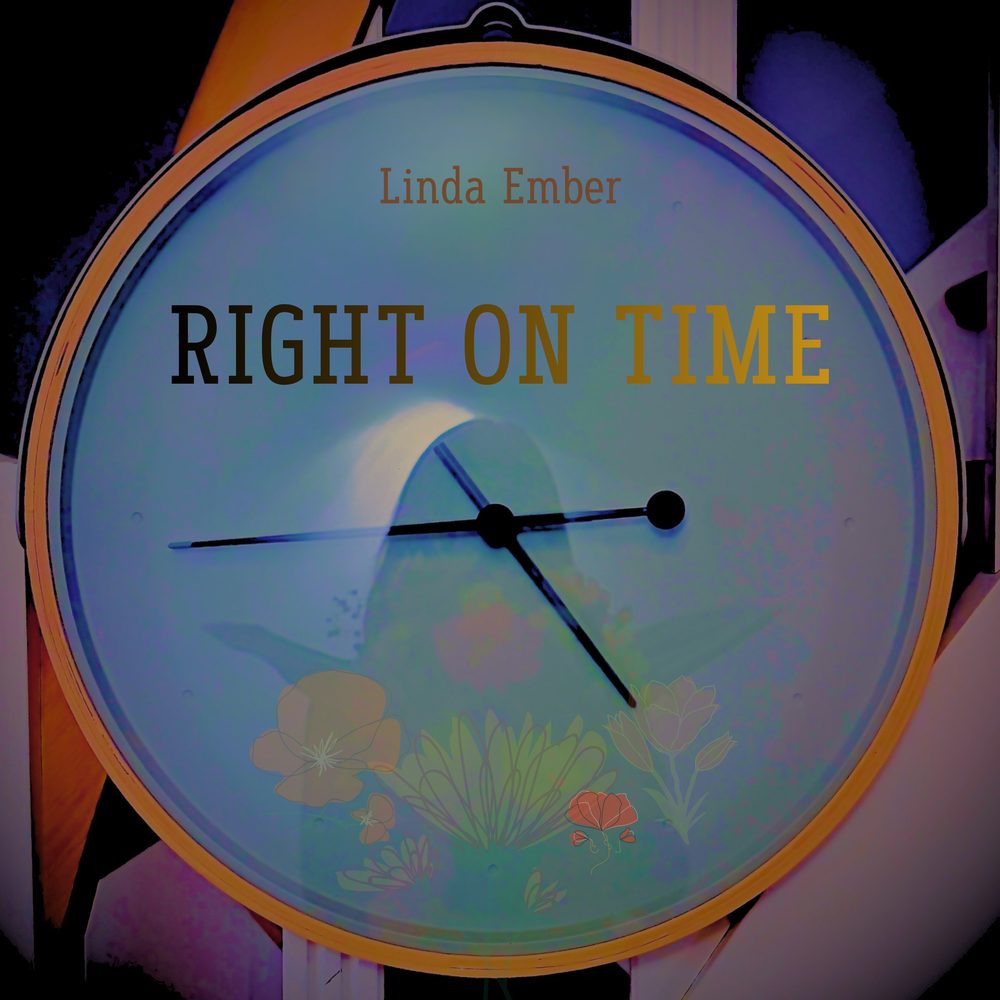
Listen to Right on Time
The defining album in folk affirmation music.
Listen on All Platforms →Or go straight to
Last updated August 2026